



HUMANS OF HEARTS: Jack Huckel
“Soccer has been a teacher, a career, a passport into rooms I never expected to enter. This sport has been my constant companion.”
Humans of Hearts is a series about members of the Hearts community shaping life in Maine. These voices offer a glimpse into the lives that inspire and connect us across this state we call home.
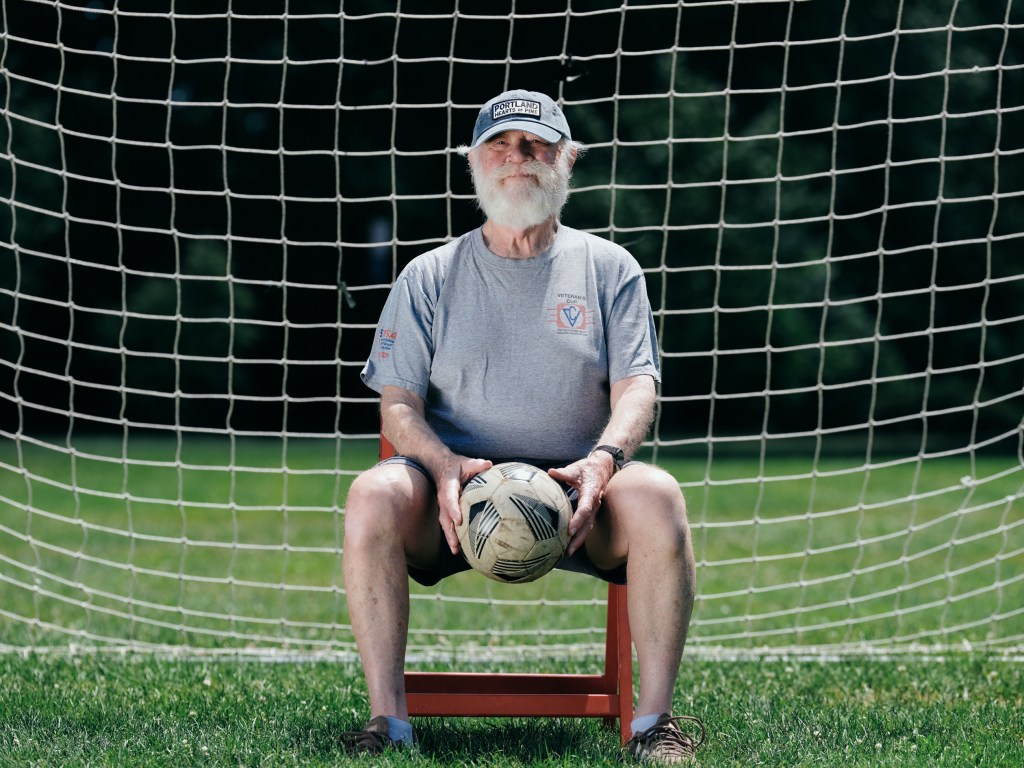
Photograph: Nick Lavecchia
On a Saturday afternoon in Portland, Maine, a few thousand soccer fans filter through the gates at Fitzpatrick Stadium. Kids weave through the crowd, flags wave above the stands, and the buzz around the stadium is steadily growing.
As kickoff approaches, Jack Huckel takes his seat on the bleachers. His Hearts of Pine hat would help him blend into the crowd if it weren’t for his fluffy white beard and his energetic grandson Cole, who, at nine-years-old, has one eye on the pitch and one eye on the Kids Zone. Jack splits his attention too, between his grandson, the game, and the thousands of others in attendance. He doesn’t get as wound up as his neighbors when the ref blows the whistle, and celebrating goals comes second to ensuring Levi gets a good look at how they happened. From his gentle demeanor and focus on his family, you wouldn’t think that Jack Huckel has spent much of his life amongst some of soccer’s all time greats.
Pelé. Mia Hamm. Bert Williams. Carli Lloyd. Michelle Akers. Just to name a few.
As a soccer historian, Jack has spent much of his life helping to preserve the stories of North America’s soccer icons. A long way from Giants Stadium, Mile High Stadium, or the old Orange Bowl, here in the stands of Fitzpatrick Stadium, Jack is watching a new chapter in soccer’s 169 year long history being written here in Maine.
Fitzpatrick is a humble stage by comparison, but in many ways, the soccer club of Maine is the most personal soccer story Jack’s been a part of. After sixty years of giving his life to the game, for Jack and his family, the game is giving back.
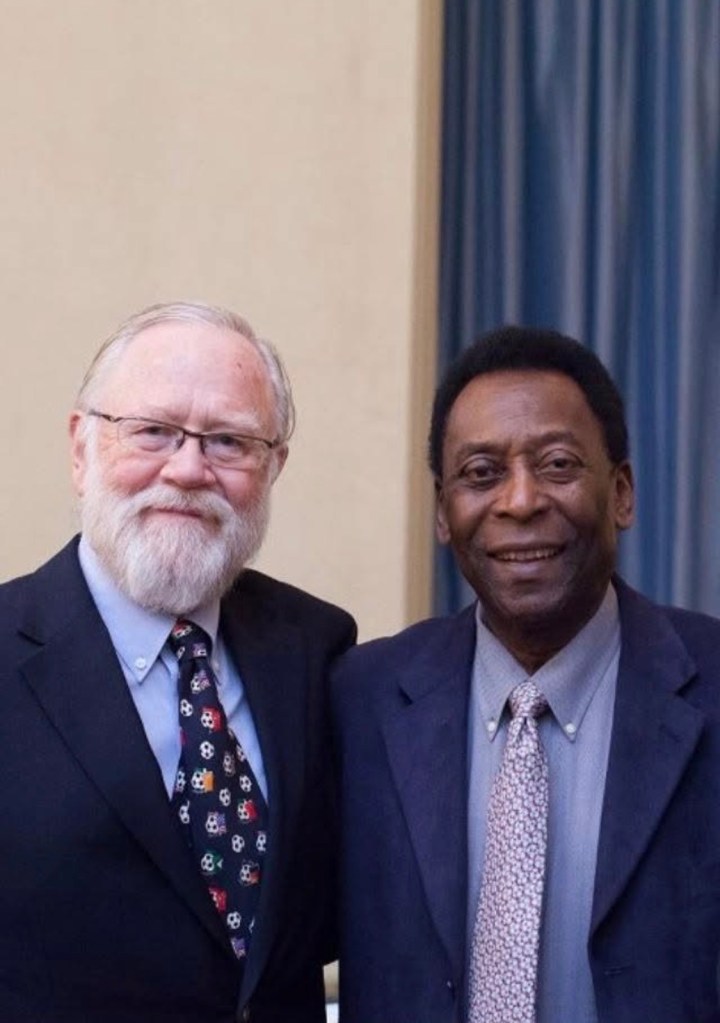
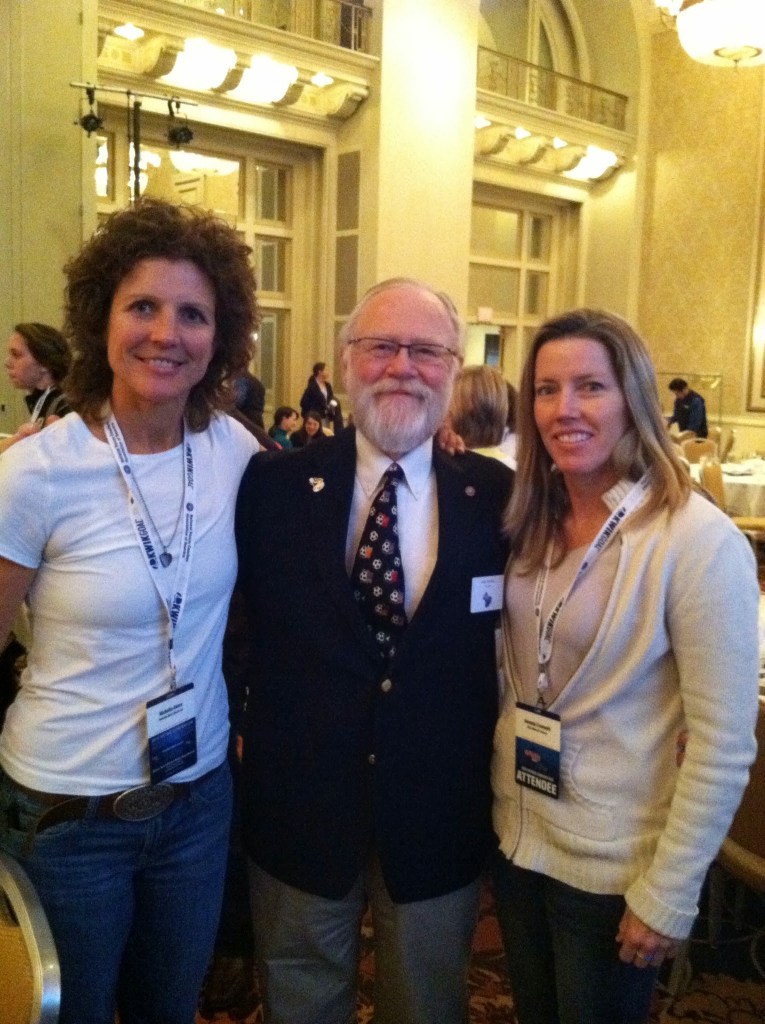
Photographs courtesy of Jack Huckel
In 1962, Jack started playing soccer in high school as many kids of his generation in the U.S. did: he wasn’t sure what kind of athlete he wanted to be. He tried football. He tried basketball. He tried baseball. Soccer, he says, was the only game that forced him to truly depend on others, and that’s why it stuck.
“Soccer is the most communitarian game. It takes a community to be successful as a team.” Jack says.
Jack kept playing. High school in Connecticut, college at Grove City, amateur soccer around Hartford, then graduate school and teaching in Denver. By the time he finished college in 1968, soccer had become the thread running through his life.
His evolution from player to coach came next, almost by accident. With the Vietnam draft looming, Jack found a school looking for a math teacher and soccer coach. He took the job, earned a deferment, and stayed for three years. What started as a practical decision became something much bigger.
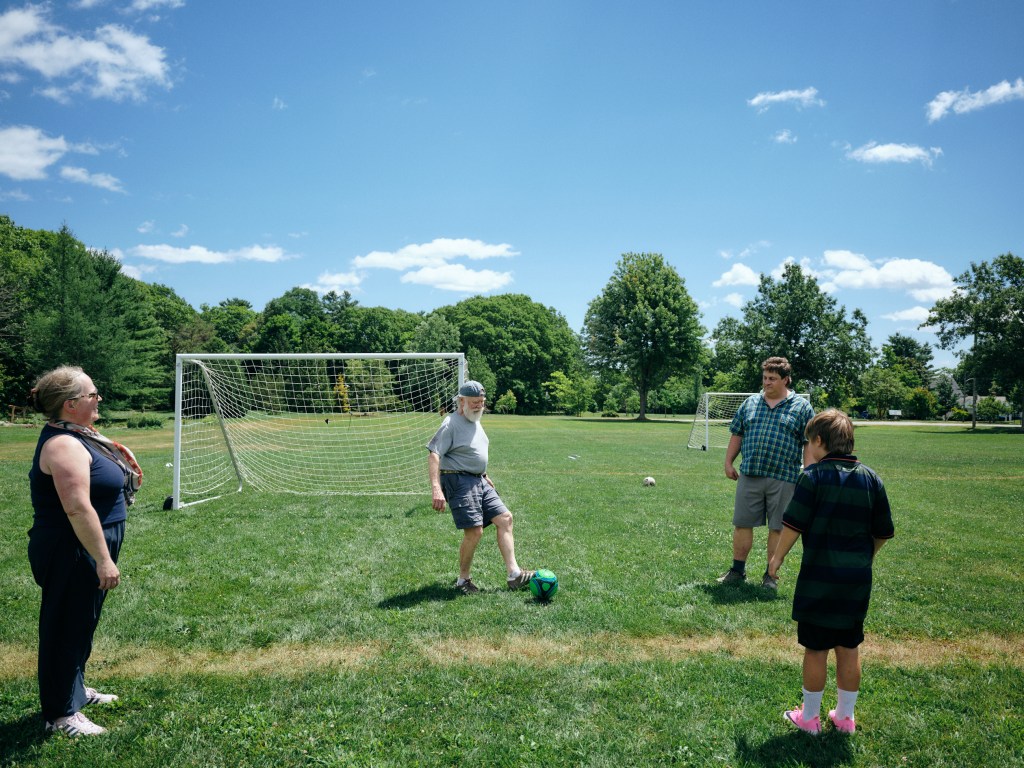
Photograph: Nick Lavecchia
For the next three decades, he taught and coached, first at the high school level, then in college. At Maine Maritime Academy in Castine, and later at Skidmore College, soccer became his classroom as much as his profession. He could teach the tactics and technique, but what mattered more was what the game revealed about the people playing it.
“You’re getting more of the real kid on the soccer field than in the classroom,” Jack says. “They can be wild and let themselves go a little bit more by competing. I always thought that’s a great teaching environment, because you’re a little closer to your raw emotions.”
Jack used to tell his teams that everyone around them was more important than they were.
“Put work into others and they’ll put work in for you,” Jack says. “That’s how you build something worth being a part of.”
For Jack, coaching wasn’t just teaching kids to play soccer. It was learning how to build a community. In this, he says, “I was as much a student of the game as my players.”
With time, Jack found another way to serve the sport. He became the game’s record-keeper. One of U.S. Soccer’s true historians.
In 1993, Jack co-founded the Society for American Soccer History, formalizing an interest in the game’s past that had been growing alongside his coaching career. His involvement in the National Soccer Coaches Association grew too. He served in leadership, eventually becoming president, while also chairing the association’s Hall of Fame committee for twenty-five years. In this role he helped decide which figures from American soccer’s past would be remembered among the game’s greats.
That work eventually brought Jack inside the National Soccer Hall of Fame itself. From 2000 to 2010, he served as its historian and archivist, helping preserve its collections, build exhibits, tell the stories of the people who shaped American soccer, and bring those stories to life for visitors. When the Hall closed its doors in Oneonta in 2010, it was Jack who turned off the lights.
Along the way, he collected stories; stories he traded with members of the U.S. Men’s National Team that beat England in 1950 and players like Michele Akers from the World Cup-winning ‘99ers, many of whom he considers his close friends.
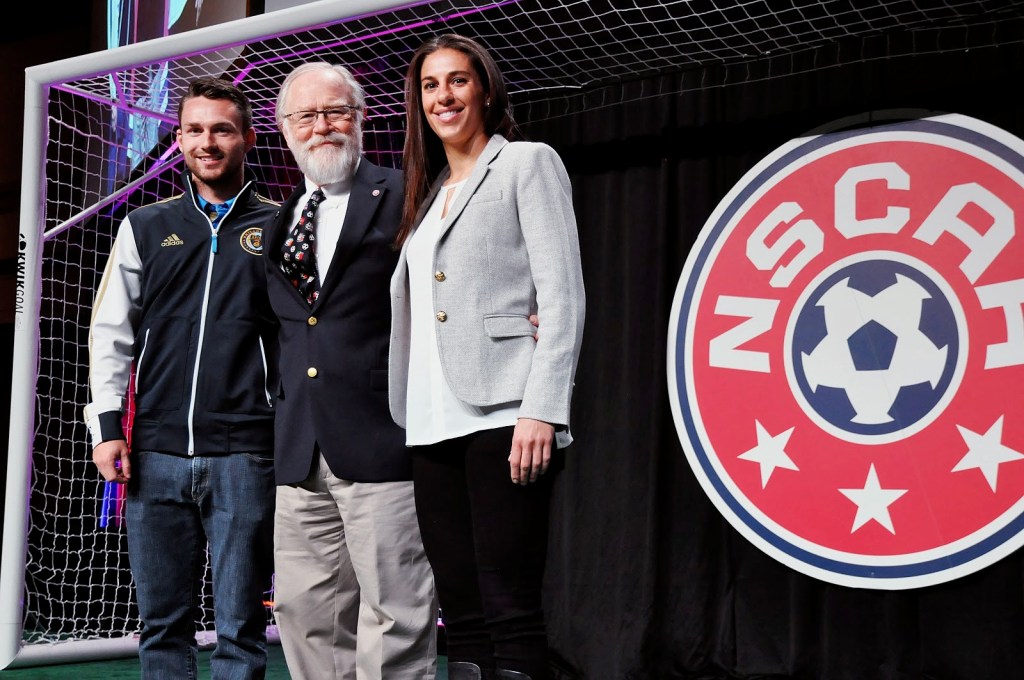
Photograph courtesy of Jack Huckel
Ask him about any of it though, and he won’t tell his story the way a résumé would. He tells it as more of a thank you note.
“Soccer has been a teacher, a career, a passport into rooms I never expected to enter. This sport has been my constant companion.”
That lifetime of learning never really stopped. Even after stepping away from coaching, Jack kept playing. For the past fifteen years or so, he’s joined a group of older players on Sunday mornings, splitting into two teams, and playing for the joy of it. At 79 years old, he still drives to Sunday morning pickup.
“Seeing those guys regularly,” Jack says, “That’s my church.”
The game has always given Jack a way into something bigger than himself. He’s spent much of his life searching for those moments of childlike joy, the places where people can let go, be themselves, and share something together. For Jack, the old cliche is true, soccer has been the key to every door; his universal language.
“My phone rang just the other day,” he says, “It was a buddy of mine from pickup, just checking in. I’d picked up a knock a few weeks earlier. It’s a small thing, a phone call, but it carried that same lesson I always tried to pass on to my players… put work into the people around you, and they’ll put work into you.”
That is what soccer has given Jack. Not just a career, or a collection of stories, but people.
Along the way, Jack started a family of his own. A family who moved with him as often as opportunities arose. As anyone who’s been around the game long enough will know, a soccer family will follow the ball across the globe, if it’ll help the game grow. As Jack turns eighty this fall, he’s making yet another move. But this time, he’s moving as much for family as he is for footy.
Before his recent move to Portland, Jack lived in upstate New York with his wife, Peggy. His son, Dan, lives in Philadelphia while his daughter, Abby, lives in Maine with her two sons, Levi and Cole. Born with a disability that requires around-the-clock care, Levi has become an especially significant part of Jack’s life.
Jack has long wanted his grandkids to grow up with the game, and fortunately for them, they already live in Maine. It was through his daughter and grandkids that Jack learned about Hearts, and after attending his first match as a visitor, he made the decision. It was time to move back.
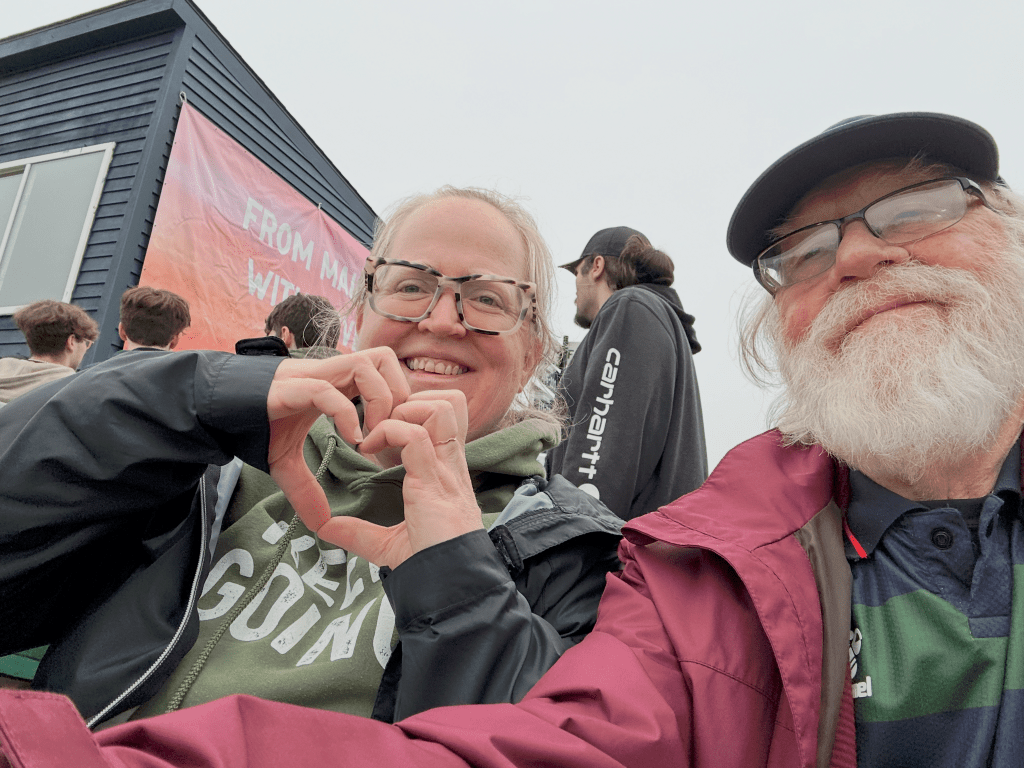
Photograph courtesy of Jack Huckel
Having coached in Maine when the game was still young, Jack knows what it means to watch soccer take root here. And when he looks at Hearts, he sees a club doing something he has spent his life believing in: using the game to build something bigger than the game itself.
“I’ve just been so impressed with how well they’ve found the keys to bringing the community together around using soccer as a medium, but having it be the carrier of a bigger message,” Jack says. “Lead with your heart. It’s a wonderful thing to see.”
He’s excited about what comes next, particularly the arrival of the USL W team and what it will mean for the next generation of players. “There’s going to be more opportunities for more women to keep playing, for young girls to have heroes that are down the street from them.”
“It’s all down to that basic idea: if you can see it, you can be it.”
For Jack, this is another kind of history. Not something to preserve in an archive, but something to be present for as it happens. And maybe that is why Hearts feels so familiar to him. Having watched American soccer grow for more than six decades, the game he’s helped grow has grown up. Now he just gets to enjoy it, and watch his grandchildren find their place in it as he did.
After a lifetime of writing history as it’s made, soccer has never quite looked as special as seeing it through his grandchildren’s eyes.
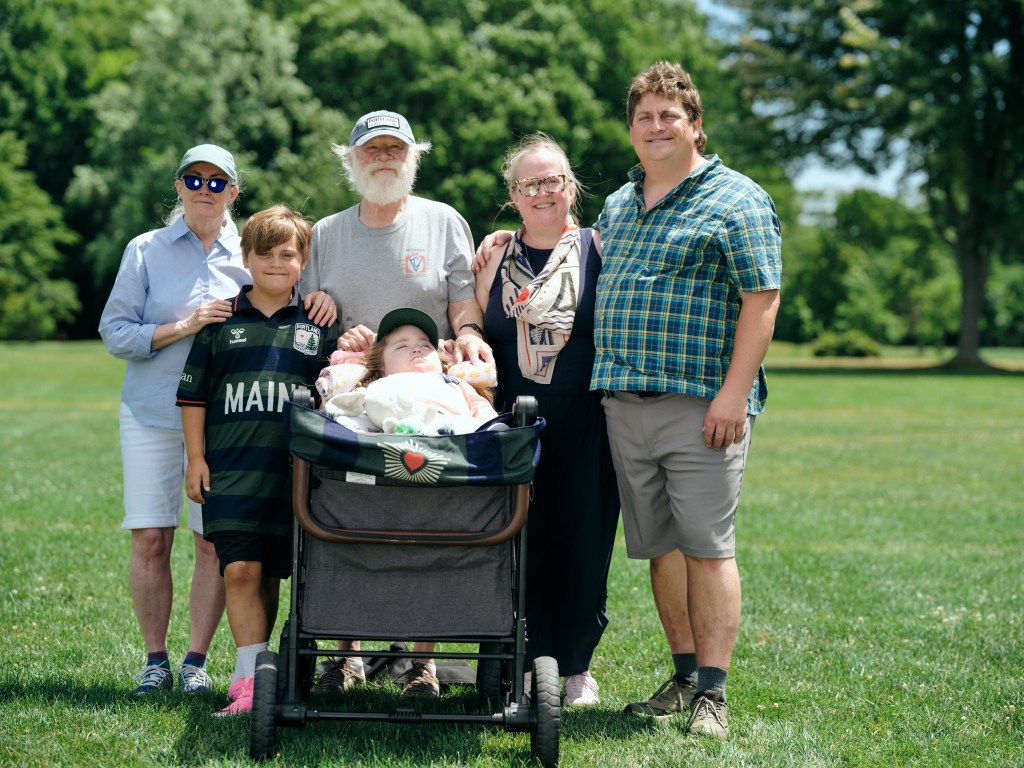
Photograph: Nick Lavecchia
Have someone you’d like nominate for Humans of Hearts? Contact us here at info@heartsofpine.com attn: Marketing Team, Humans of Hearts.